
ELEVATOR JUSTICE
JGR’s FIVE-POINT PLAN FOR ELEVATOR EQUITY ON THE 7 TRAIN
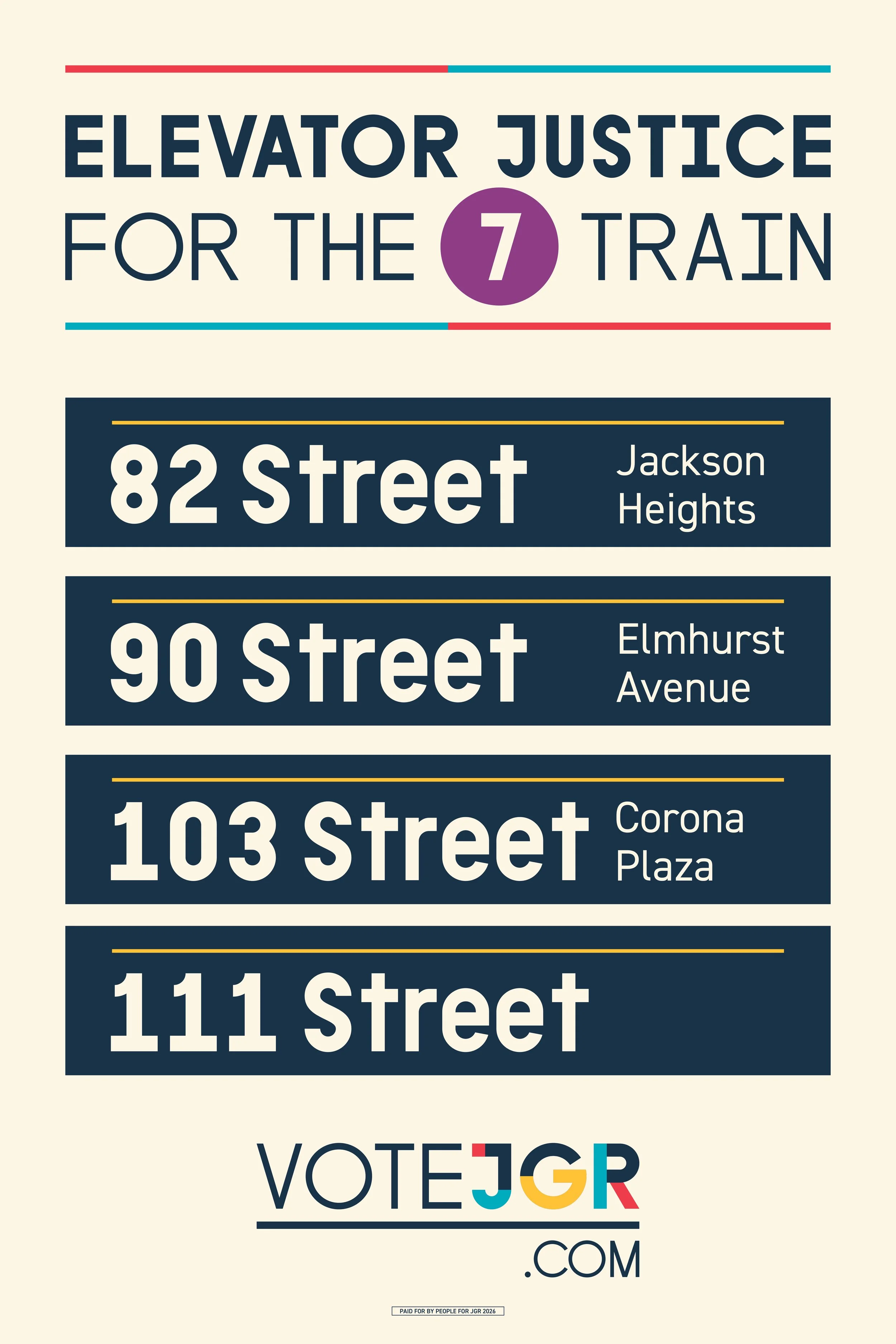
For generations, the 7 train has been the lifeline of working families in Jackson Heights, Corona, Elmhurst, and East Elmhurst. It carries home health aides, restaurant workers, airport workers, students, seniors, and families every day. Yet five stations along this line in the Senate District: 82nd Street–Jackson Heights, 90th Street–Elmhurst Avenue, 103rd Street–Corona Plaza, 111th Street, and Mets-Willets Point still do not have elevators.
That means thousands of New Yorkers who use wheelchairs, parents with strollers, seniors with mobility challenges, and workers with injuries are effectively locked out of their own transit system. This is not just an inconvenience. It is a civil rights issue. It is a racial justice issue. And it is an economic justice issue.
Jackson Heights, Corona, Elmhurst, and East Elmhurst are majority immigrant communities and among the most diverse neighborhoods in the entire world. They are also working-class communities where many residents rely on transit as their only way to get to work, school, and medical care. Yet decades of infrastructure investment have bypassed these stations.
As someone who served on the MTA’s Permanent Citizens Advisory Committee before becoming an elected official, I have seen firsthand how decisions about transit investment are made and how often communities like ours are asked to wait while others move ahead. That is exactly why I am running for State Senate: to make sure Queens finally has a strong voice fighting for the infrastructure our communities deserve.
Accessibility should not depend on your ZIP code. In the State Senate, I will lead a plan to finally deliver elevator access to these five stations and ensure that Queens riders receive the dignity they deserve.
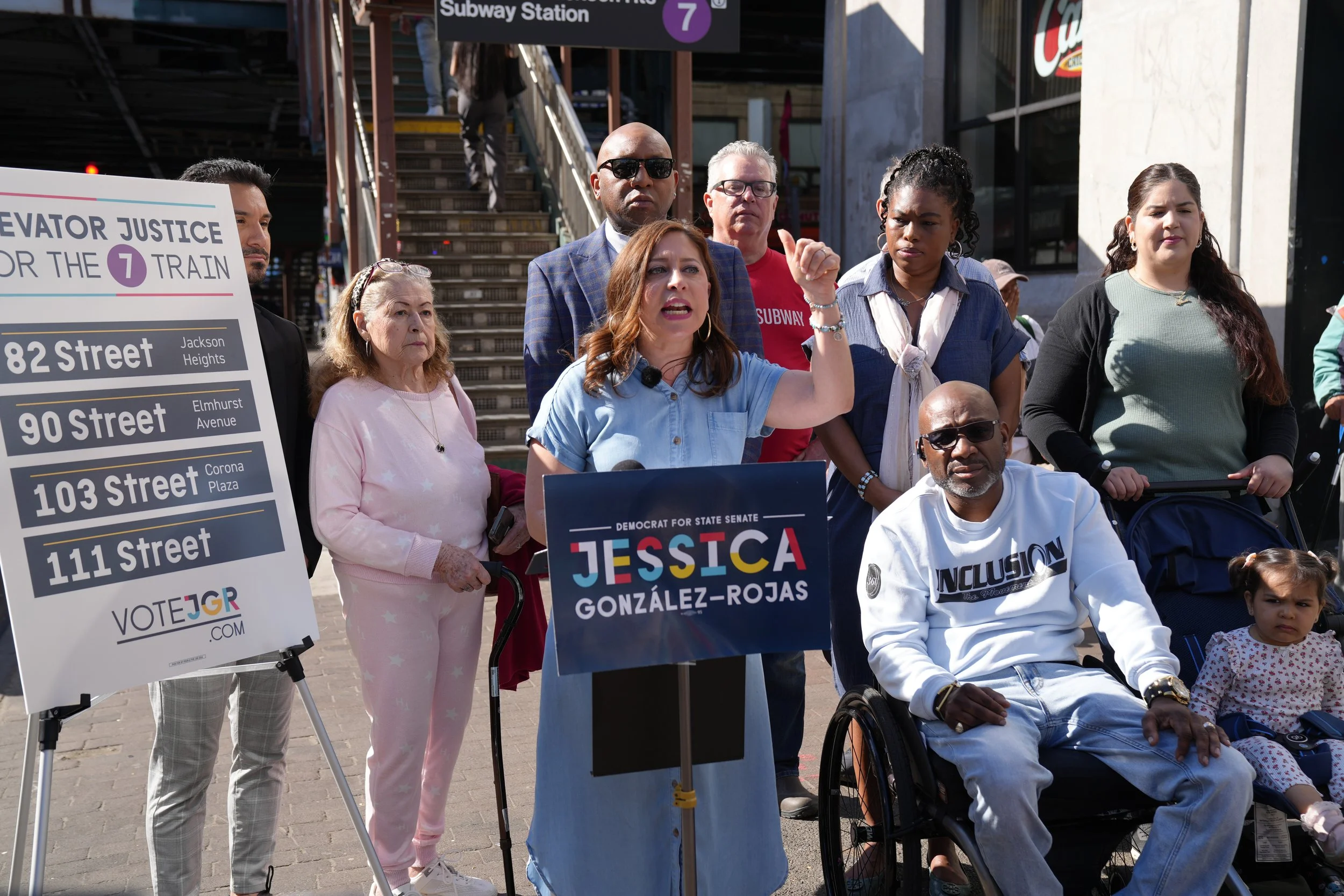

Add Your Name: Tell MTA to BRING ELEVATORS to Roosevelt Avenue
1. A State Mandate for Elevator Installation at the Five Queens Stations
New York State must require the Metropolitan Transportation Authority to install elevators at 82nd Street, 90th Street, 103rd Street, 111th Street, and Mets-Willets Point stations as a priority capital project.
These stations serve tens of thousands of riders every week, yet they remain inaccessible more than three decades after the Americans with Disabilities Act became law. Communities like Corona, Elmhurst and Jackson Heights, where many residents are seniors, immigrants, or people working physically demanding jobs, cannot continue to wait.
In the State Senate, I will introduce legislation requiring the MTA to include these five stations in the next capital plan as a bundled accessibility project, ensuring construction begins within a defined timeline. These projects should receive complementary accessibility improvements in the design phase, including:
Wider fare gates for wheelchairs and strollers
Improved lighting and safety features
Clear multilingual signage
Safer pedestrian access around station entrances
Accessibility must be treated as essential infrastructure, not an optional upgrade.
2. Equity-Based Capital Planning
Transit investment should reflect community need, not political convenience. Queens neighborhoods served by these stations have some of the highest transit dependence rates in New York City, meaning residents rely on the subway far more than other communities. Yet accessibility investments have historically been concentrated in wealthier or more politically influential areas. Using an equity framework would immediately elevate the need for elevators at these five stations.
I will push for the MTA to adopt a Transit Equity Index when determining accessibility investments. This index would prioritize stations in communities with:
High transit reliance
Higher percentages of seniors and people with disabilities
Large immigrant populations
Lower median incomes
3. A Dedicated Accessibility Fund in the State Budget
The state must provide the funding necessary to make the transit system accessible for everyone. As State Senator, I will fight to create a dedicated Accessibility Acceleration Fund within the MTA capital program. This fund would prioritize elevator installations in historically underserved neighborhoods like Corona, Elmhurst and Jackson Heights.
New Yorkers contribute billions of dollars to the transit system every year. Communities that carried New York through the pandemic including health care workers, delivery workers, airport workers deserve infrastructure that works for them. Elevators are not a luxury. They are the difference between independence and isolation.
4. Community Oversight and Transparency
For too long, accessibility projects have been delayed by bureaucracy, cost overruns, and lack of accountability. My plan will require the MTA to establish a Queens Accessibility Task Force, made up of local residents, disability advocates, community boards, and elected officials. This body will track progress on elevator installation and ensure that the community has a direct voice in project design and timelines. Residents deserve to know when construction will begin, when it will finish, and why delays occur. Accessibility projects should move forward with transparency and urgency.
5. Taking the Politics out of MTA Funding
In order to achieve the goals of an Accessible Transit Justice plan, we must ensure dedicated funding streams to invest in the system and the workers that move New Yorkers. To take the politics out of MTA funding, New York State must provide dedicated transit funding directly to the MTA without requiring annual legislative appropriation. Currently, funds can be delayed, reduced, or diverted during the budget process— and in past years, hundreds of millions intended for transit have been shifted to the state’s general fund. As State Senator, I will advance my legislation guaranteeing direct, protected funding would create a more stable and predictable revenue stream, strengthen the MTA’s financial position and credit rating, and reduce the risk of service cuts or fare hikes. Transit dollars should be safeguarded for riders, not subject to political maneuvering.
A Transit System That Reflects Our Values
Jackson Heights, Corona, East Elmhurst and Elmhurst helped carry New York City through its darkest days during COVID-19. Our neighbors kept hospitals running, delivered food, cleaned buildings, and staffed essential jobs.
Yet years later, these same communities still face basic infrastructure inequities including subway stations they cannot fully access.
That must change. In the State Senate, I will fight to ensure that every New Yorker, regardless of race, income, or ability, can use the transit system with dignity.
Accessibility is not just about elevators. It is about justice. It is about opportunity. And it is about building a city where everyone can